Thursday, 28 September 2017

"Stormy Hawkins" by Ana Morgan


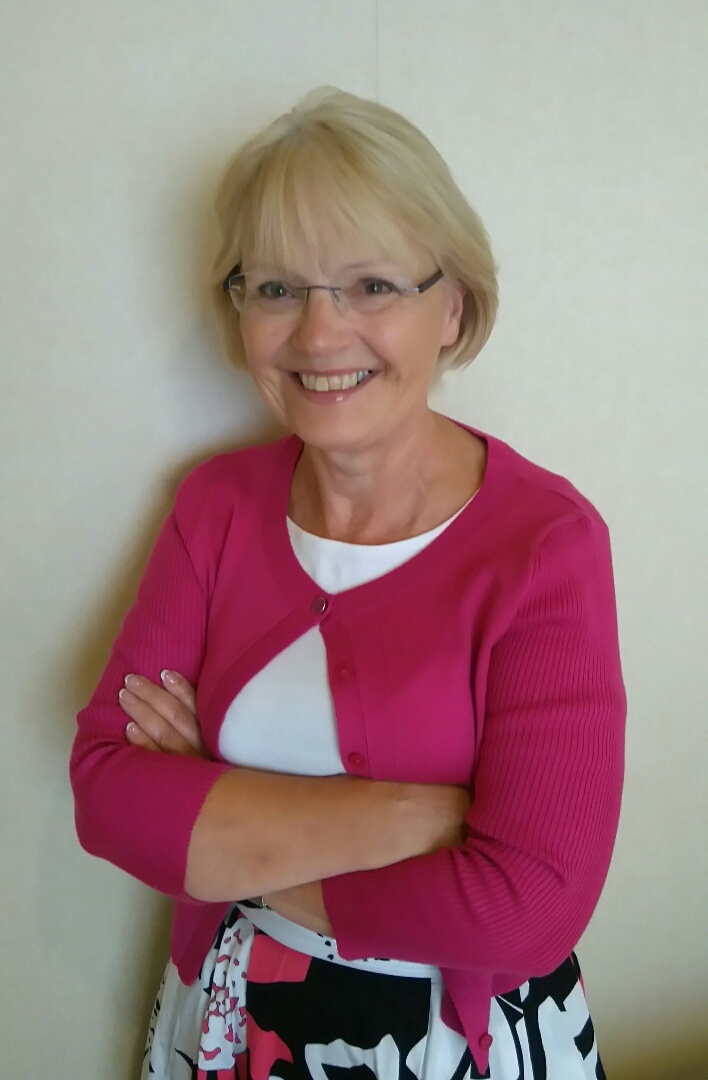
My guest today is Ana Morgan whose debut novel Stormy Hawkins was published yesterday.

When she was small, Ana's dream was to know something about everything. She has studiously waitressed, driven a school bus, run craft service on indie film sets, milked cows, wandered through European castles, wired a house, married a Marine, canned vegetables, and studied the stars. She knows how to change a flat tire but prefers a gallant, handsome stranger who strips off his jacket and spins the lug nuts for her.

She began her writing career with essays about living on an organic farm and raising vegetables for a 100-member CSA. Now, in addition to writing sensual historical romances, she is the current president of From the Heart Romance Writers and an editor for The Talking Stick, a regional literary publication.

Today she tells us about the research she did for her novel: 

A poet-friend confessed recently, when I showed her the cover for my debut romance, Stormy Hawkins, that she had the start of a western romance buried under her bed. But she’d never write it because the research would be too demanding, and take too long.

I was surprised. I love the research aspect of writing stories set in unfamiliar times and places. Maybe this stems from my life-long goal to know something about as many things as possible.

Stormy Hawkins is set on a cattle ranch in 1890 southeast South Dakota. I live on a farm in north central Minnesota, so I had a leg up on some essential aspects of the story. I’ve driven through both North and South Dakota with a husband who provides running commentary about the geological and agricultural history of every small town and continental divide, and who will slam on the brakes to read a historical marker.

We moved to our then-rundown farm in March 1972. The “house” was a roof over three pushed-together hunting shacks. We had running water but no bathroom. The outhouse was a two-seater. My grandmother was the first relative to visit. She bit her tongue and bought for me a wringer washing machine, which I filled using a hose that attached to the kitchen faucet.

My eager hubby went to the local sale barn and bought a Jersey milk cow. She gave birth to twin heifers, and we learned to milk her by hand. Soon we were in the cattle business.

So, I had some first-hand knowledge of what daily life might look, feel and smell like on an 1890’s ranch. Act 1 of my story was research-lite. In Act 2, the heroine Stormy pursues the hero Blade Masters onto a Missouri River steamboat. I needed to research that.

I ordered books from the local library on steamboats. I bought used books—hardcovers with oodles of pictures—from ABE Books (a fantastic resource). I searched historical society websites for riverboat arrival and departure schedules from St. Louis, MO (my hero’s intended destination) to Yankton, SD., and found first-hand accounts of riverboat boiler explosions (frighteningly common) and boat sinkings due to hitting snags (trees submerged under the Missouri River’s surface).

I knew how the characters would dress on the ranch, but made sure to check when jeans were invented. I took a fascinating workshop on the history of clothing so I would envision correctly the fancy dress that Blade orders for Stormy as a ploy to win her father’s trust. (Blade wants to buy their ranch.)

Barbed wire, too. I couldn’t have the characters erect a fence before barbed wire was invented. That detail, and the history of the army forts established along the Missouri River to protect settlers from Indian attack, set the exact date for the story.

My editor at SoulMate Publishing checked on—and correctly called me out on—the dates when double hung windows came into use. She googled the French brandy in the story to see if it could have been imported. (I invented the brand, so yes, it could have.)

The research I gathered to write Stormy Hawkins will be useful as I write the next book in the Prairie Heart series. Book 2 will propel Blade’s sister, Mary, on a Missouri riverboat and port hopping search for her missing fiancĂ©. But, I will have to pull out the picture books. Passenger riverboats were grand conveyances with stately dining rooms, gambling, and promenades—if you had money. Steerage passengers slept beside stacks of cargo and ate what they brought aboard.


Stormy Hawkins
Blade Masters has finally spotted his ideal Dakota Territory ranch, where he can live alone, forget his cheating ex-fiancée, and bury the shards of his shattered heart. All he needs to do is sweet-talk the ailing owner, and his spitfire daughter, into retiring.

If she weren’t desperate, Stormy would never hire a cowhand. She’s learned the hard way that she’s happier working her family’s ranch alone. But, the greedy banker who holds their mortgage just demanded payment in full—or her hand in marriage.

Will this handsome drifter protect her? Or does he have designs of his own?

Available from Amazon

Thursday, 21 September 2017

What Makes a Page-Turner?

Comments and reviews about my romance novels quite often contain phrases like:’ Couldn’t put it down’ (or ‘unputdownable’ as one person said!) or ‘I was glued to it’ or ‘Once I started, I had to carry on until I finished it.’ In fact, one of my readers once ‘complained’ that I had kept her up late because she had to read ‘just a bit more’ until she got to the end of the book!

Obviously, these are very satisfying remarks for an author, but they made me think about what aspects of a novel make it a page turner.

The first requisite, of course, is that readers want to know what happens next. This means that the plot must be intriguing enough for them not to be able to guess the rest of the story by the time they get to Chapter 2. Of course, with a romance novel, they know the hero and heroine will get their happy ending, but the author must introduce enough unexpected twists and turns to keep readers in suspense and wondering how that is ever going to happen.

Another important aspect is to keep the story moving forward. Long descriptions of people and places might be suitable for literary fiction, but romance readers don’t want to read a whole page describing the scenery, or the layout of a house or exactly what the characters are wearing down to the last detail. A short paragraph with well-chosen words is enough to allow readers to use their own imaginations. Anything more can slow down the action – which brings me to another big turn-off i.e. irrelevant scenes where nothing actually happens.

There’s no need to describe the heroine’s shopping trip, or her day at work, or her cooking or gardening efforts, unless something happens during these events that advances the story. This may seem obvious, but I’ve read some stories with scenes that add nothing to the story. It’s worth remembering that every scene, indeed every page, should contain some kind of action or development. It doesn’t necessarily have to be something dramatic, but there should be a significant ‘something’ that relates to the plot or to the characters. This could be anything from a major turning point in the story or the introduction of a new character to a subtle change of attitude or a character learning something about themselves or the other person or the situation they are in. This applies to conversations, too. Skip all the ‘Hello, how are you?’ pleasantries and any other dialogue that rambles on with no real relevance to the rest of the story.

Cliff-hangers are a well-known device to keep readers turning the pages, especially at the end of a chapter. It’s been said that you should never end a chapter with a character turning off the light and going to sleep – because if your readers are reading in bed (which, of course, many people do) they will probably do the same. You should aim to ‘End each chapter with a bang, not a whimper’! Ask a question, foreshadow something that is going to happen (without giving it away), end with a critical moment for one or more of the characters – anything that will make your readers want to carry on reading to find out what happens next – even though it might be midnight.

An author can also drop hints during a chapter which make readers start asking questions e.g. Character A seems to have a hidden agenda – what is it? I used this in my novel, Irish Inheritance, which brought this comment from one reader when she was part-way through the book, “I’m dying to know what …. (no spoilers!) is up to.” There are also times when readers can be one step ahead of your characters. In Irish Secrets, for example, the hero is not what he is pretending to be and in Irish Deceptions something is revealed by the hero which the heroine doesn’t suspect. Hopefully, this makes people want to continue reading to discover what will happen when the heroine discovers the truth.

My final point is the characters themselves. Romance readers want to empathise with the heroine and fall in love with the hero, and the author needs to ensure that readers get to know the characters well enough to care about them. This means that they’ll be interested enough to turn the pages to find out what happens to them, and how they will eventually reach their happy ending.

Thursday, 14 September 2017

Make Me Cry

It’s happy endings that make me cry, especially in films.

I can remember one of the very first films I cried at – an old film about the San Francisco earthquake (with Clark Gable, Spencer Tracy and Jeannette Macdonald). At the end, when they’re all camped out above the burning city, a boy runs up the hill shouting ‘The fires are out!’ and they march to the top of the hill, look out over the ruined, smouldering city and sing San Francisco, open your Golden Gate … well, I’m in floods of tears!

Another film which ALWAYS makes me cry, even though I’ve seen it many times, is Apollo 13. The astronauts, after an agonising wait, finally break the radio silence. Years ago, I watched it actually happening on TV and fisted the air when we knew the astronauts were safe. In the film, it’s the reactions of all the families and the Houston crew that make me fill up, every single time! 

I cried at the end of The Incredible Journey when Shadow, the golden retriever, eventually appeared. I cried when Hugh Jackman found Nicole Kidman after Darwin had been bombed in Australia. For heaven's sake, I even cried at the end of Toy Story 3 when the toys found a happy new home!

I cry at the end of Carousel when Billy makes his peace with Julie, I cry when the family escape to safety over the mountains in The Sound of Music, I cry when Emile re-appears at the end of South Pacific – in fact, a lot of musicals make me cry, because the endings are happy.
.
If a reader tells me that the happy ending of any of my books has made them cry, then I know I've got it right.


What movie or book has made you cry?

Thursday, 7 September 2017

Setting Goals

‘They’ say writers should set targets/goals for themselves but I’ll start by saying that I don’t usually set any for myself.

Several years ago I took part in NaNoWriMo and completed the ‘goal’ of 50,000 words in a month i.e. averaging 1,666 a day. However, I was very aware of how the quality of my writing deteriorated. That novel (or rather that very inadequate first draft) needed over 6 months of re-writing and editing before it was ready for submission and I have to admit it still remains my least favourite novel.

Another year I took part in a 100K Challenge i.e. 100K words in 100 days, which included any kind of writing e.g. blogs as well as stories or novels. In my case, probably over half of my daily total each day came from writing a series of blogs (in advance) for the A-Z Blog Challenge. I didn’t really increase my output as far as my novel was concerned.

When I am writing a first draft, I’m well aware that I am my own worst enemy, because, however much I try, I can’t turn off my inner editor. Even though I know I’ll spend hours re-writing, adding, deleting, and tweaking once the first draft is done, I still do the same while I’m writing that first draft! Occasionally I might say, ‘That’ll do for now, I’ll sort it out later,’ but that doesn't often happen.

I’m constantly searching for the right words or phrases, and I know when something isn’t working as I want it to work, whether it's an emotional experience, a build-up of suspense/tension, or simply a word picture of a scene. Therefore I can spend a long time working on a particular scene until I’m satisfied with it. Sometimes I can write 1,000 words in a day; sometimes I’ll agonise over just 50 words.

However, this month I have set myself a target. It’s a fairly modest one of 500 words a day, which I think is achievable for me. After a week’s work, I’ve actually managed to average 678 per day. A couple of evening ago, I was ready to finish for the day (it was after midnight!) but I’d only written 366 words. I forced myself to go on for another 15 minutes and add enough words to get to the magic 500. I’m happy to say I didn’t delete those words the next day!

500 a day for 30 days = 3,500 a week (which is the average length of my chapters) and a whopping 15K for the month. IF I can continue at this rate, the first draft (which currently stands at 38,000 words) will be nearing completion by the end of October. I’ll let you know if that happens!


Meanwhile, what goals do you set yourself? And do you achieve them? 

Thursday, 31 August 2017

All Change!

The last couple of weeks have taken me (and my books) in yet another different direction, which is one of the reasons I didn’t post my usual Thursday blog last week. Everything seemed to be up in the air – but a lot can happen in a week!

For various reasons, which I won’t go into here, my association with the publisher who accepted my books at the beginning of July didn’t work out, and it was a mutual (and amicable) agreement to accept this.

Which meant that I had to find a way forward – and I’m delighted to announce that yesterday I signed a contract with Tirgearr Publishing who will re-publish my four Mist Na Mara books initially, and hopefully some of my other books, too, at a later stage. As Tirgearr is based in Ireland, it seems to be a very appropriate place for my Irish books to find their new home!

I’ve already received a very warm welcome from Kemberlee and from other Tirgearr authors, some of whom I already know, and I look forward to getting to know more in the future.

After what has been somewhat of a roller coaster during the past four and a half months since my publisher Rebecca Vickery regretfully announced the closure of her publishing company, I now feel very settled, and I’m looking forward to working with Kem and her team. For the time being my books are all offline, but they will go back once the editing and proof-reading has been completed and new covers have been designed.

So – watch this space!

In the meantime, please consider joining me and other Tirgearr writers – and readers – at the Tirgearr Publishing Reader Group on Facebook:  https://www.facebook.com/groups/tirgearr.publishing/

See you there, hopefully.

Thursday, 17 August 2017

Carol Warham visits my blog today

My guest today is Carol Warham whose debut novel, Resolutions, was released last week by Tigearr Publishing.

Welcome, Carol, and please tell everyone a little about yourself.

Writing has been my love since childhood, when I started by making small comics for my dolls and friends. I progressed to training as a journalist for a short while, but soon realised that was not the career for me. Marriage, two daughters and a busy working life meant I didn’t write for a number of years. However once things settled down I returned to writing and was lucky enough to have published short stories, poems and holiday articles.
In recent years I have become a judge in the short story section for the HysteriaUK competition and also for the RNA’s romance novel of the year.
Earlier this year, I, also, represented my local book group on BBC Radio Leeds, talking about books and the work on my novel.
I’ve lived in Yorkshire for over thirty years. I’m lucky enough to be surrounded by some beautiful countryside, which is ideal for my other passion of walking, often with a dog called Sam. This lovely area is the ideal location for my first novel, Resolutions.

What do you think makes a good romance novel?

In my opinion, a good story is pivotal to the novel. This must then introduce characters the reader becomes involved with, either loving or hating them depending on who they are. Every romance novel needs to have a happy ending.

Are you a plotter or a pantser? Plus anything you want to say about how you create your plots e.g. from a basic idea or from the characters or ???)

I am very much a pantser. I let my writing flow without any planning at all, although this can mean I have a lot of work to do when I start the editing. The plot for Resolutions came from a location and the name of a town in Florida, U.S.A. The story and the characters followed on from there.

How do you know when to stop ‘tweaking’ your manuscript?

You don’t, or at least, I don’t. I had to finally decide to ‘let it go’, or I would have been tweaking and changing parts for ever. Even now I cringe at certain sentences or paragraphs and wish I could change them.

What’s the best writing advice you’ve ever received/read?

The first piece of advice which really surprised me was to read the manuscript aloud. This really helps to hear where the story doesn’t flow. It definitely works and I would say that is one of the best pieces of advice I have ever had.
After that it is to edit, and edit properly, taking your time and check everything, especially grammar and spelling.

What’s your cure for ‘writer’s block’ or when you’re stuck at some point in your story?

I don’t have a cure. If I need to, I walk away and go and do something else, in the hope the ideas will form. It’s also helpful to have friends you can discuss the story with. They can really help you look at where the story is going and what you need to carry on with it.

What, for you, is the easiest part of writing? And what’s the hardest?

The easiest part is definitely the first draft, when the story is coming alive and I’m learning about my characters. I found editing hard, time consuming and at    times very frustrating, but then I had a lot to learn.

Please give a short ‘blurb’ about your latest release plus publisher, release date, where it can be obtained – and any other details you want to include.

Resolutions was published by Tirgearr Publishing on 9th August 2017. It is available as an e-book through Amazon, Kobo, Smashwords and Nook.

Blurb:
Carly Mitchell returns to the small town of Yeardon in Yorkshire almost a year after running away on her wedding day. Now she wants to try to make amends with Steve, his family, and the townspeople who had prepared a huge party to celebrate her New Year’s Eve wedding.
She intends to stay only for a few days at the Resolution Hotel, owned by Steve’s parents. However, her plans change when Steve’s father is taken ill, and she feels obliged to step in and help with running the hotel. This also means having to deal with Steve’s antagonism since he has never forgiven her for humiliating him.
A further complication comes in the form of Ben Thornton, the local doctor, to whom Carly feels an immediate attraction. They enjoy getting to know each other and falling in love, until a famous model from Ben’s past arrives in the town, and stays at the hotel.
Steve attempts to get his revenge on Carly by driving a wedge between her and Ben, and by threatening to reveal what he knows about Ben’s troubled past unless Carly leaves town.
The resolution lies in Carly’s hands as she struggles between wanting to flee from the town again and wanting to stay with the man she has grown to love.

Here is a short extract from when Carly arrives back in her home town of Yeardon. I hope you enjoy it.

Would she ever be able to walk through this town and into the shops again and receive a warm welcome? What sort of greeting would anyone give her now? What sort of greeting did she deserve? Yeardon had been a wonderful place to grow up. It was one of those towns where you knew everyone and they knew you.
Her mind a maelstrom of anxiety, she tightened her grip on the steering wheel. Who would have believed anyone’s hands could shake so much?
On the far side of the town she turned into a drive, which led down a short, narrow lane to an hotel, a converted mill owner’s house. After finding a space in the car park, she switched off the engine, but remained in the car for a few minutes. Taking a deep breath, she closed her eyes.
The drumming of the rain on the roof was not reassuring. The weather seemed to be giving a further warning to leave now while she could. She peered through the rain- splattered screen at the sign above the front door. In copper plate script, it read ‘Resolution Hotel’. The building looked well-kept and fresh. Business must be going well for Jim and Abi.
“Well, here goes.”
Her words, spoken out loud, helped to break the tension as the knots tightened inside her. After all she couldn’t sit there all night, could she? Inhaling deeply, she grabbed her overnight bag and willed her legs to move. Her head down against the biting rain; she ran up the five steps and pushed open the heavy oak front door.
Jim Sinclair sat at the desk. A single lamp broke the shadows in the reception area. These competed with the twinkling lights of the large Christmas tree in the corner. She was glad she’d rung the day before to ask if it was possible to book a room. He didn’t say there weren’t any vacancies as she’d expected him to. She scrutinised him for a few seconds. Jim had put a little weight on but he looked well. He was his usual casual self in slacks and rolled up shirtsleeves.
Shaking off the rain as best she could, she waited by the door. Her heart pounded as she struggled to find something to say.
Jim saved her the necessity. “Well now, can’t say I ever expected to see you back here again, especially now.” He put down the book he had been reading. “Abi’s taken it hard that you’ve decided to come back, especially after not hearing a word from you for nearly twelve months. I had to persuade her to let you stay here.”

Thanks for having me on your blog Paula. It was a pleasure to answer your questions.

Contact details


Thursday, 10 August 2017

'Irish Inheritance' excerpt

“A house in Ireland?” Jenna Sutton stared over the mahogany desk at the lawyer. “Someone I’ve never heard of has left me a house in Ireland?”
The white-haired lawyer peered over his steel-rimmed spectacles. “A half share of the house, Ms. Sutton. Along with a half share of what, at current exchange rates, amounts to approximately fifty thousand pounds.”
Jenna shook her head and swiped several strands of hair back behind her ear. “I don’t understand, Mr. Moore. Why would this Helena Keating leave me a house and twenty-five thousand pounds? How does she even know about me?”
“Ms. Sutton, I can only give you the information passed to me by the law firm of Daniel McGrath in Dublin. We were instructed to find any descendants of James Oliver Sutton—”
“My grandfather.”
“Yes, and as far as we can ascertain, you are his sole descendant. I understand your father died in an automobile accident about twenty years ago. My condolences.”
“Thanks, but I was six when he died and only have some vague memories of him.” She frowned. “Do you know what the link is between this woman and my grandfather?”
“That wasn’t part of our instructions.”
“Have you any information about her?”
Mr. Moore pushed his glasses back up his nose and flipped through the papers in the blue manila folder on his desk. “Miss Keating was born in 1920 in County Galway, Ireland, and died last year in Dalkey, near Dublin, where she has lived since 1940.”
“So she was—” She did a quick calculation in her head. “About fifteen years older than my grandfather.”
The lawyer picked up another sheet of paper. “Yes, he was born in April, 1936.”
“I wasn’t aware he knew anyone in Ireland, and I’m pretty sure he never went over there. He lived his whole life in a small village in Kent.”
She couldn’t imagine her grandfather being anyone’s toy boy either. He’d been devoted to her grandmother. So what on earth was his connection with this Irish woman?
Another thought occurred to her, and she looked at Mr. Moore again. “You said I had a half share of the house and the fifty thousand pounds.” Even saying the words seemed surreal. She hadn’t yet wrapped her mind around what the money meant. “Who gets the other half?”
“I’m sorry, Ms. Sutton. I don’t have that information. The Dublin law firm is dealing with the estate. Our job was simply to—”
“Yes, okay, to find the descendants of my grandfather.”
“I’m sure Mr. McGrath will be able to tell you more when you meet him in Dublin.”
“When I meet him in – whoa, who says I’m going to meet him?”
“Mr. McGrath has suggested an appointment at two-thirty on May 10th, to be followed by a visit to the house the next day.”
“May 10th? That’s—” Another quick calculation. “That’s next Tuesday.”
“Yes. Will that be a problem? I would be more than happy to contact your employer and request leave of absence for you.”
“Erm – well, I’m an actress and – and kind of between jobs at present, so I don’t have an employer.”
“I see.” The lawyer cleared his throat, and Jenna had the impression she might as well have said she was a nightclub stripper. “That simplifies matters, of course.”
She chewed her bottom lip. Not really, but maybe Charley would lend her the money for a quick trip to Dublin.
No, hold on. If she was due to inherit twenty-five thousand pounds plus half a house, perhaps she could get an advance.
“Actually, no, it doesn’t. The thing is I’m – erm – I have some cash flow problems at the moment.” Slight understatement, Jenna.
“I understand, and in that case, on the basis of Miss Keating’s will, I can arrange for our bank to advance you a small loan to cover your expenses.”
“Great. Thanks.” She cocked her head to one side. “Why does this Irish lawyer want me to go to Dublin?”
“As the executor of the will, he has visited the house and requires you to visit, too, before you make any decision about it.”
Jenna narrowed her eyes. “Why?” Visions of a dilapidated Irish cottage flashed through her mind. Had the roof fallen in? Was it riddled with wet or dry rot? Or overrun by rats?
“I’m sorry, Ms. Sutton, I don’t have—”
“That information,” she finished off for him. “Seems like I need to curb my curiosity until I get to Dublin."


'Irish Inheritance' is available for Kindle and also as an Audiobook at