Showing posts with label Coniston. Show all posts

Tuesday, 10 April 2012

Interesting Islands

Several of the Lakeland lakes have islands. As I’m concentrating on the southern half of the area, here’s a brief look at the islands in Windermere, Grasmere and Coniston Water.
Windermere is the largest lake, about ten miles long, and it has eighteen islands. The largest of these is Belle Isle which is about two-thirds of a mile long. It was originally known as Long Holme and it’s said that the governor of the Roman fort at Ambleside had a villa on the island. In the 18th century, the wealthy Curwen family bought the island and it was re-named Belle Isle after their daughter Isabella. In 1774, they built ‘Belle Island House’, which was unusual as it was a circular shape, with 3 floors and a portico with 4 pillars. Wordsworth was pretty disparaging about it, saying it looked like a tea canister in a shop window! Isabella’s descendants lived on the island until 1993, and it is still privately owned.

The other islands on Windermere are much smaller, and are all called ‘holme’ from the Norse word ‘holm’ (meaning island). Maiden Holme is the smallest, consisting of a single tree!

Grasmere has only one lake, known simply (and fairly unimaginatively) as ‘The Island’. Evidently Wordsworth used to row across to this island and one of his sonnets is about the tranquillity he found here.
The largest island on Coniston Water is Peel Island, which is owned by the National Trust. This is thought to be the fictional Wild Cat Island where the children camped in the Swallows and Amazons books by Arthur Ransome. This photo shows their 'secret harbour'. The other two Coniston islands are Oak Island and Fir Island, although the latter only deserves the name island when the water is very high and cuts it off from the shore.

Tuesday, 3 April 2012

Coniston, Coppermines and Campbell

Coniston is a small town which lies between the lake with the same name and the 2,634 feet mountain known as the ‘Old Man of Coniston’. It’s a Victorian town which developed in the 19th century because of the copper mines nearby, and is now a mecca for walkers, climbers and sailing enthusiasts.

The copper mines date back to the 1500s. German miners carried out the early mining activities, using hand tools. In the 1750’s the Macclesfield Copper Company developed the earlier German workings, and by the mid-19th century the mines reached their peak period. However, the increasing depth of the mine workings meant the cost of maintenance and pumping became uneconomical. Imports of cheap copper from abroad hastened the end of the industry at Coniston. Some remains of the surface features can still be seen in the area.

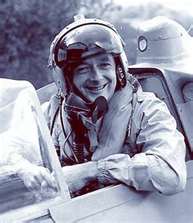
In 1955 Donald Campbell broke the water speed record at Ullswater in the northern Lakes but was killed on Coniston Water in his attempt to regain the record in 1967. After reaching 320 mph, his boat, Bluebird, was filmed in its last moments when it lifted, somersaulted and plunged back into the lake, nose-first, cartwheeled several times and sank. http://www.youtube.com/watch?v=gvItDfQIJ50&feature=related


I can still remember the shock when we saw this film on our news programmes. Bluebird wasn’t recovered until 2001, and the remains of Campbell’s body were buried in the churchyard of Coniston Church.


In contrast, I have a lot of happy memories of Coniston – sitting by the lake and enjoying enormous ice-creams (many times!). There was one unforgettable time when we hired a motorboat which broke down part way down the lake. We thought we were going to drift endlessly (a bit like the ‘Flying Dutchman’?) but eventually my friend’s husband managed to get the engine started again! We also had several trips on the Coniston Gondola, a steam yacht which was first launched in 1859, retired from service in 1936, but then restored in the 70’s.