However, on the very first day, by an amazing stroke of luck, the first trench opened in the car park revealed a human skeleton. As one of the archaeologists said later, “If we’d decided to dig the trench just fifty centimetres either way, we would have missed it completely."

Of course, this skeleton could have been anyone, but …
Firstly, it was revealed that the skeleton showed signs of battle injuries, especially to the head.
Secondly, the spine was twisted by scoliosis – not the notorious humpback of Shakespeare’s play, but enough to give him one shoulder higher than the other, as reported in contemporary chronicles.
Thirdly, several more trenches uncovered medieval walls, and showed that the area where the bones had been found would have been in the friary church.
For many of us, this evidence was enough to be 99% sure that the bones were those of Richard III. The professional archaeologists and historians, however, were not willing to commit themselves at this stage.
Four months of intensive investigations followed – examination of the bones for injuries and disease, carbon-dating tests, and also DNA analysis.
Examination of the bones showed several injuries, including two severe blows to the head, either of which would have proved fatal. The bones also showed that he had scoliosis, not from birth but from when he was about ten or eleven. The experts said the skeleton revealed a high protein diet of meat and fish, evidence of a rich lifestyle at a time when the ‘ordinary people’ lived mainly on vegetables.
Carbon-dating showed that the bones were from a man who died between 1455 and 1540 (the battle of Bosworth was 1485)
 The most conclusive evidence came from DNA analysis.
Amazingly, a direct link had been found, via the female line, from Richard’s
sister Anne to a Canadian cabinet-maker, now living in London. He agreed to be
tested for Mitochondrial DNA, and this was then compared with the
DNA from the bones.
The most conclusive evidence came from DNA analysis.
Amazingly, a direct link had been found, via the female line, from Richard’s
sister Anne to a Canadian cabinet-maker, now living in London. He agreed to be
tested for Mitochondrial DNA, and this was then compared with the
DNA from the bones.It was an exact match, which was why the Leicester University archaeologists were able to announce, at the beginning of February, that ‘beyond reasonable doubt’ the bones were those of Richard III.

As soon as the announcement had been made, discussions broke out about where Richard III should be buried. Under the terms of the exhumation licence, the decision over the location of the king's reburial rested with the University of Leicester, and so it was announced that he would be buried in Leicester Cathedral, as the nearest 'consecrated place' to where his bones were found. There are those who maintain he should be buried in Westminster Abbey but evidently the Queen, for whatever reason, has ruled out a royal reburial for him there.
An even stronger argument has been made for his reburial in York Minster since it seems this is where he intended to be buried. Yorkshire was his childhood, and some say his spiritual, home, and York never wavered in its loyalty to Richard. On the day after the battle of Bosworth, the York City Council recorded its reaction to the news: King Richard, late mercifully reigning over us, was through great treason . . . piteously slain and murdered, to the great heaviness of this city.
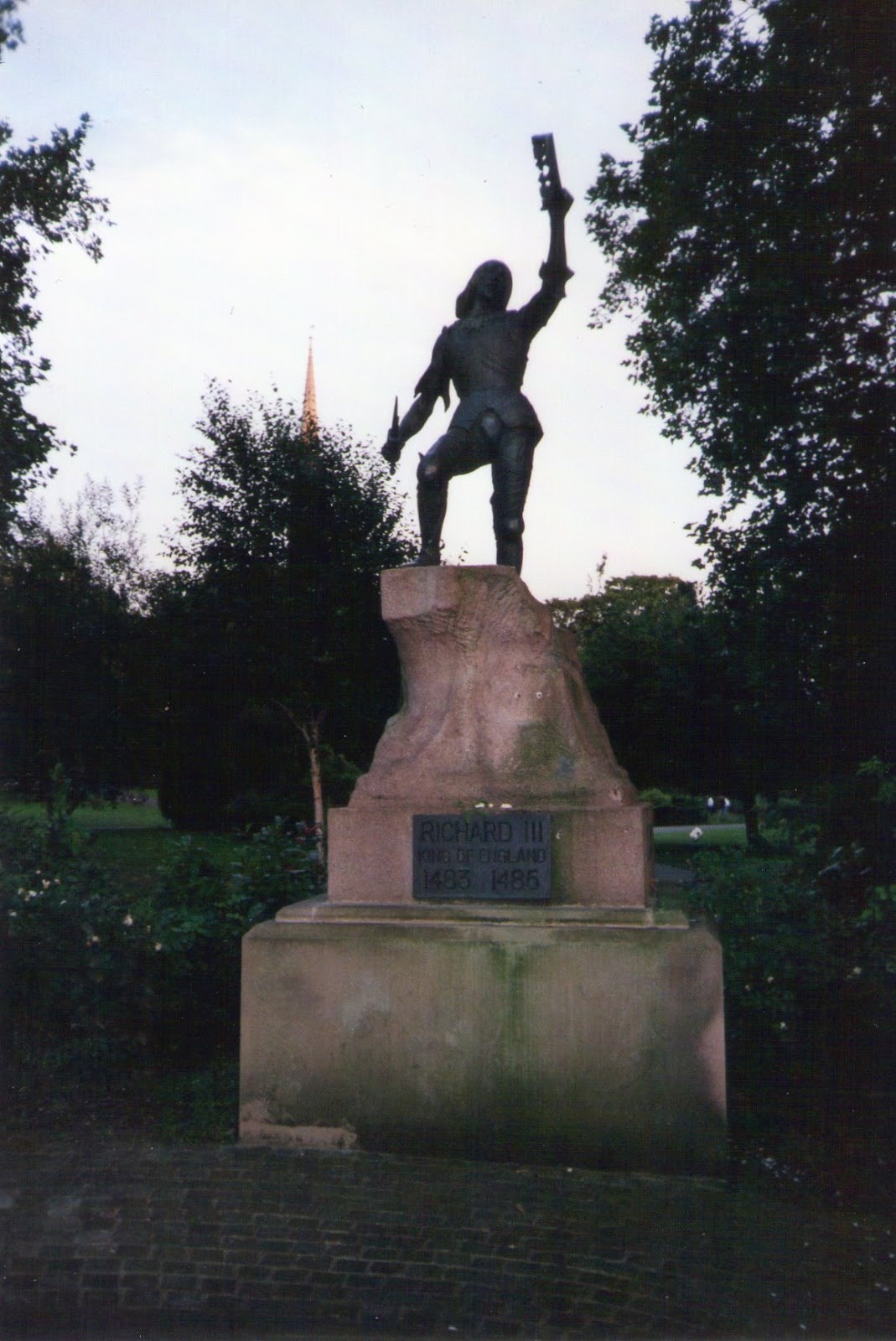
Having said that, the only statue of Richard III is in the city of Leicester, not in York!