Showing posts with label Hill Top. Show all posts

Saturday, 14 April 2012

Museums - or what to do when it rains!

Many people think the Lake District simply has its lakes, valleys and mountains, souvenir shops, hotels and pubs, but in fact there are several interesting museums in the area - ideal for those rainy days!

The town of Kendal boasts several museums, including one illustrating ‘Lakeland Life and Industry’ which is an excellent introduction to the Lake District National Park. It has period farmhouse rooms and workshops showing how Lakeland people lived and worked, and also a recreation of the study of Arthur Ransome, the author of the ‘Swallows and Amazons’ children’s stories.
Another museum in Kendal is dedicated to Lakeland’s natural history and archaeology, and in the Quaker Meeting House, there is the 'Quaker Tapestry' - 77 panels of tapestry, each illustrating some aspect of Quaker history.

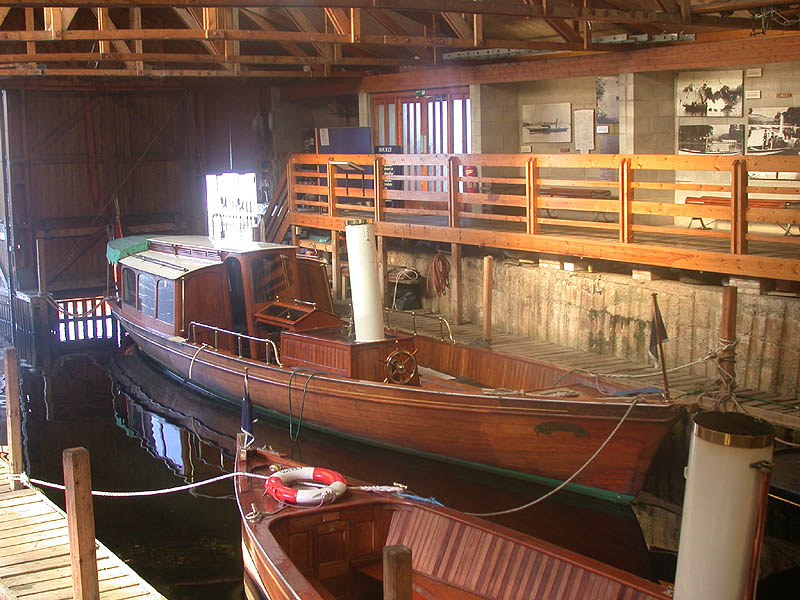
Near to Windermere is the Steamboat Museum which has a large collection of Victorian and Edwardian steamboats, dating from about 1850 to 1910. There’s also a boat (called Dolly) which is said to be the oldest mechanically propelled boat in the world, with its original engine still in working order. The museum also has Beatrix Potter’s rowing boat. Originally privately owned, the museum was taken over by the Lakeland Arts Trust and is currently being restored and rehoused in new buildings.


Two museums are dedicated to Beatrix Potter: Hill Top, the 17th century farmhouse where she once lived which displays some of her pictures, and also her furniture and some personal possessions, and the Beatrix Potter Gallery in Hawkshead, in the building which was previously the office of the local lawyer, William Heelis, who became her husbands. His office has been reconstructed and other rooms display some of her drawings for her children’s books.


Just outside Grasmere is Dove Cottage and the Wordsworth Museum. The cottage, once the home of Wordsworth, displays some of his personal belongings together with contemporary furnishings. The garden has been restored to the half-wild state that the poet loved, and an adjacent barn is a museum with various artefacts relating to Wordsworth’s life and times.


In Coniston, there is a museum originally commemorating the life of John Ruskin, with various exhibits linked to his life. The museum has been extended to include other aspects of life in and around Coniston, including the copper mines, farming and other local industries. Brantwood, Ruskin’s former home overlooking Coniston Water, is also filled with many of his former possessions. The house also has beautiful gardens overlooking the lake.

So when it's raining in Lakeland (which it does fairly frequently!), there are still many interesting places to visit - even though you might get soaked running from the car park!

Monday, 2 April 2012

B is for Beatrix Potter

Who hasn’t heard of Peter Rabbit? Flopsy, Mopsy and Cottontail? Jemima Puddleduck? Squirrel Nutkin?

All these were the creation of Beatrix Potter, author and illustrator, and many of them were created when Beatrix lived in the Lake District.

Helen Beatrix Potter was born in London in 1866 and, from an early age, showed a talent for drawing and painting, and also an interest in wild-life. She published her first book, ‘The Tale of Peter Rabbit’ at her own expense, but the following year it was re-published by Frederick Warne and Company. After that, she produced 2 or 3 of the small format books each year, which were very popular because of her delightful illustrations, her depiction of countryside and the characteristics she gave to her animals.

In 1905, Beatrix used some of her income from her books to buy Hill Top Farm in a small hamlet near the village of Hawkshead in the southern Lakes. What many people don’t realise about Beatrix is that, as well as being an author and artist, she also became keenly interested in the breeding and raising of the Lakeland Herdwick sheep and, after buying another farm on the east side of Windermere, she became one of the main Herdwick sheep farmers in the area.

She was also committed to land conservation and preservation, bought large tracts of land, and eventually donated all her property and land to the National Trust, which still holds and cares for that land today.

In 1913, she married a local solicitor, William Heelis, and his office, in the village of Hawkshead, is now ‘The Beatrix Potter Gallery’ with many of her paintings and sketches.

She died in 1943, but when I started visiting the Lakes in the 60’s, I got to know several older people who remembered her doing her shopping in the village. The farmer’s wife (at the farm where we had our caravan) described her succinctly: “Aye, she were a funny ol’ woman, but yer ‘ad to admire ‘er for everythin’ she did around ‘ere.”